A garden gate should make you want to walk through it. These cedar builds pair pergola tops with lattice screens, picket fencing and working gates — outdoor joinery sized for Gulf Coast weather.
Cedar is the material of choice out here: naturally decay- and insect-resistant, stable in humidity swings, and it weathers to silver if left unfinished. The structure is what separates a ten-year arbor from a two-year one — posts set solidly below grade, through-connections rather than surface screws where it counts, and rafter tails cut so water runs off end grain instead of sitting in it.
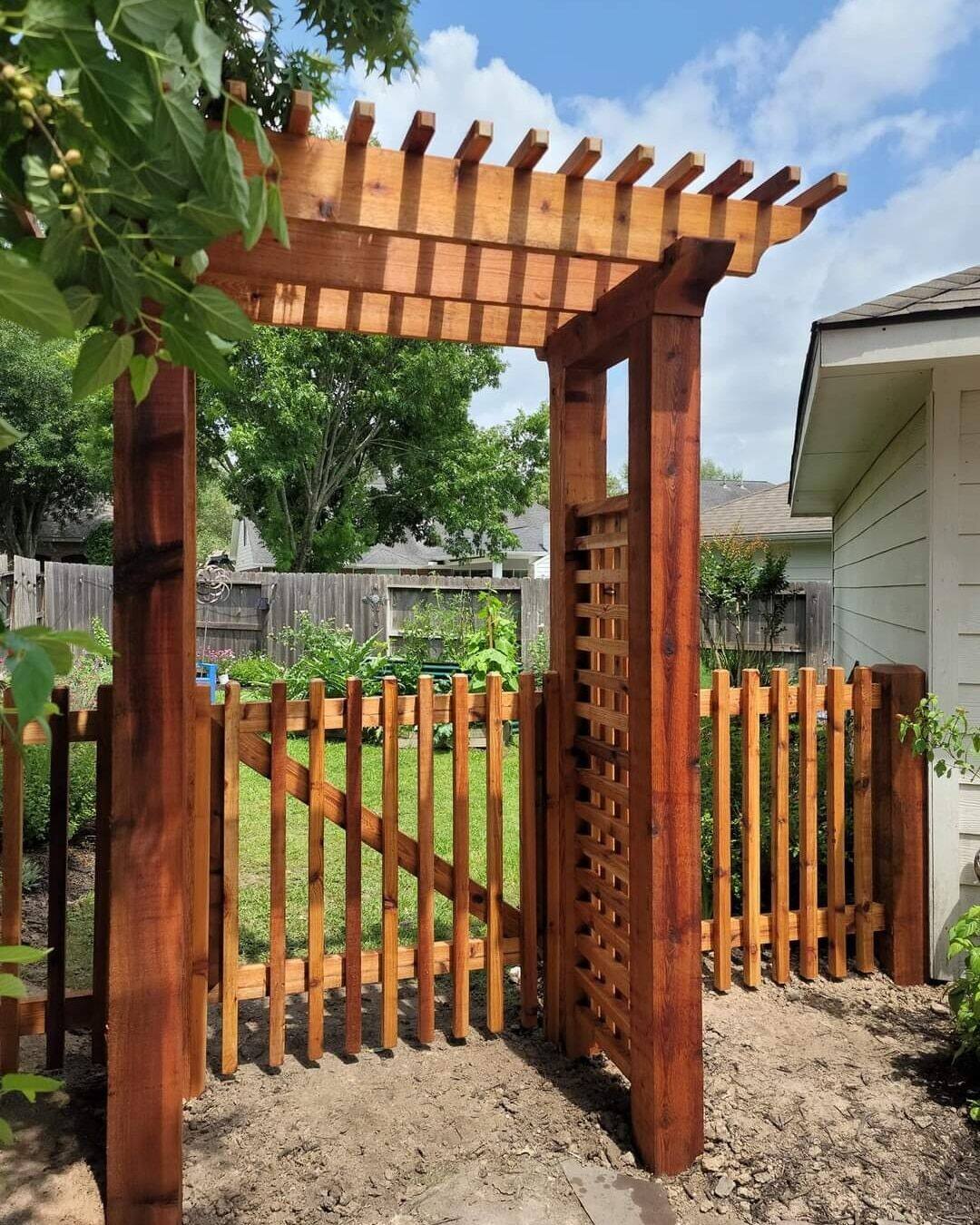
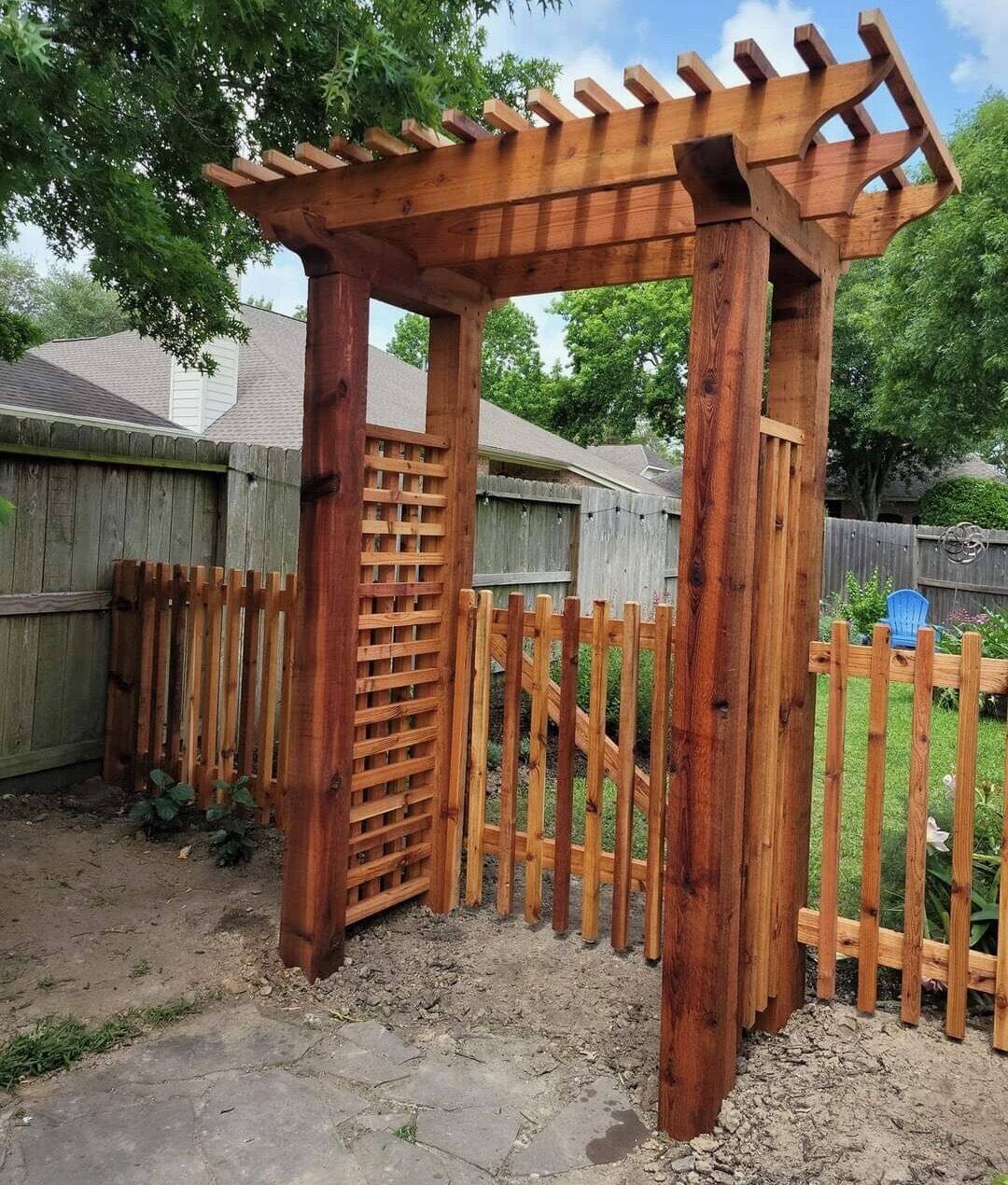
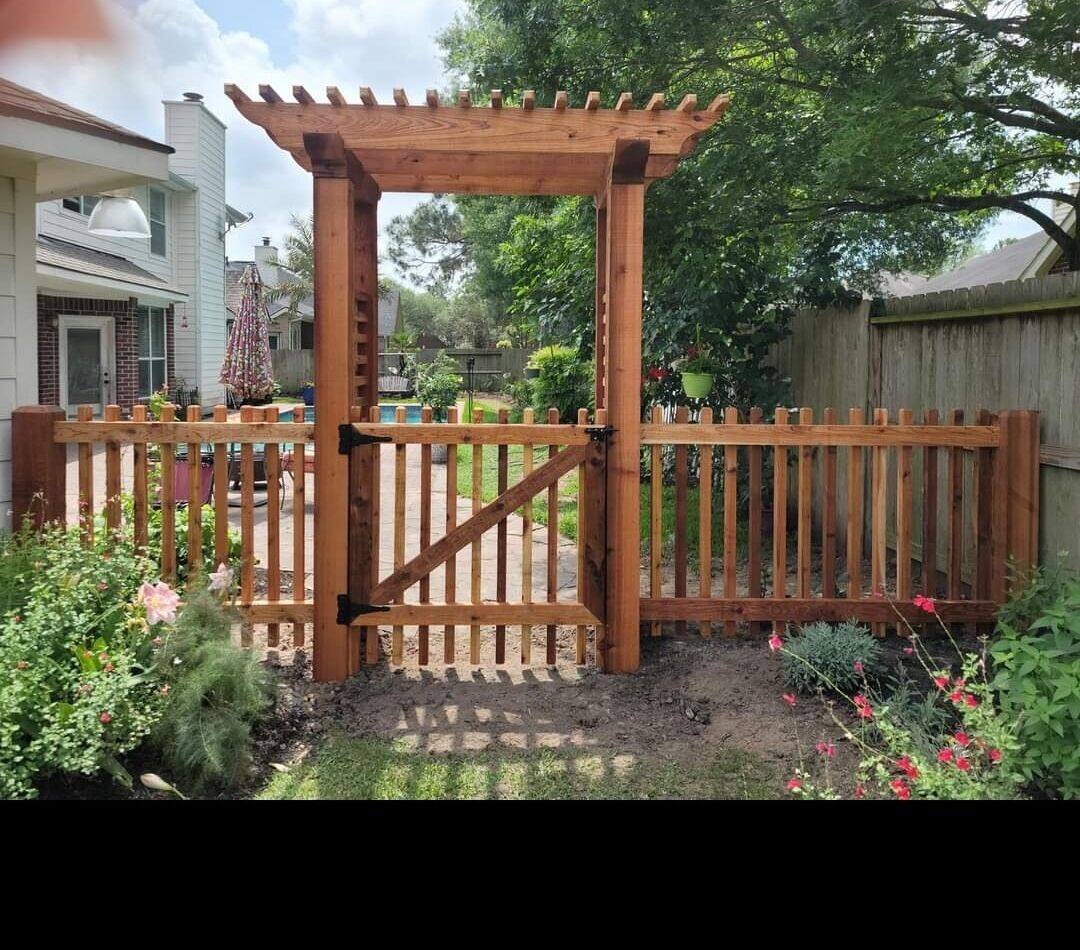
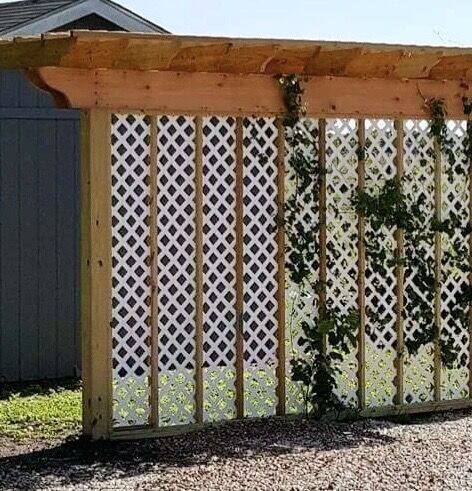
Arbor with pergola top — paired posts carrying doubled beams and notched rafter tails, with a lattice privacy panel closing one side. The notches are cut before assembly and seated so the top can take wind load without racking.The gateway — the classic form: a stepped rafter crown over a picket fence line. The arbor posts are independent of the fence posts — the gate needs a rigid frame to swing true for years, so it hangs off the arbor structure, not the fence.Set into the garden — the same joinery vocabulary meeting planting beds. Bottom rails are held clear of soil and mulch — ground contact is what kills fences, so clearances are part of the design.Privacy screen — a pergola beam carrying framed lattice panels, already taken over by climbing vines — which is the point. The lattice is framed, not just stapled, so it can carry plant weight without sagging.
Have a project like this in mind?
Free estimates. Call, text, or send a message — Luigi answers himself.